

One Service, a Lot of Ground Covered
It is easy to underestimate how much ground that one service actually spans.
Top Line Striping provides this maintenance work for properties across Metro Atlanta and North Georgia. Fresh striping, sealcoating, crack sealing, and ADA compliance are often treated like four separate services.
In practice, they belong together, and understanding why makes it easier to plan for them properly.
Maintenance Is Ongoing, Not a One-Time Job
A parking lot faces daily wear from vehicles, weather, and time. Paint fades. Small cracks form. Sealcoating wears thin. None of this happens all at once, which is exactly why it gets overlooked until it becomes a bigger problem.
Treating maintenance as an ongoing responsibility, rather than something to deal with only when it looks bad, is what keeps a lot in good condition year after year. Waiting too long usually means paying more later, since small issues left alone tend to turn into larger, more expensive ones.
This is also why striping, sealcoating, and crack sealing get grouped together here. They are not separate projects done at random times. They are the routine maintenance package that keeps a lot functional, safe, and presentable between bigger construction projects.
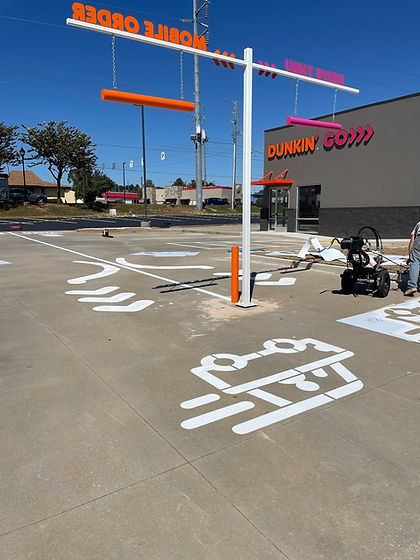


Striping and Pavement Markings
Striping does more than mark parking spaces. It directs traffic flow, defines fire lanes, and marks pedestrian crossings, loading zones, and accessible parking. Faded or unclear markings create confusion, and confusion in a parking lot leads to safety problems.
Durable striping starts with proper layout. Spaces need to meet local sizing requirements, and traffic patterns need to make sense for how the lot is actually used. From there, the paint itself matters. Commercial-grade striping paint is built to hold up under weather, sun exposure, and constant tire traffic, which is very different from the kind of paint used for a quick touch-up job.
Markings need to be reapplied on a regular schedule, since even quality paint fades with time and use. A lot with sharp, visible striping simply reads as better maintained, and that impression matters to customers, tenants, and visitors, even if they never think about it directly.
Sealcoating and Crack Sealing as Protective Maintenance
Striping keeps a lot organized. Sealcoating and crack sealing keep the pavement itself protected.
Commercial sealcoating adds a protective layer over the asphalt surface. This layer shields the pavement from sun exposure, oil and gas spills, and water penetration, all of which break asphalt down over time. Without it, asphalt dries out and becomes brittle much faster than it should.
Small cracks might not look urgent, but they are one of the easiest ways for water to reach the base underneath the pavement. Once water gets under the surface, it weakens the base, and that is how small cracks turn into potholes and larger structural problems. Commercial crack filling & crack sealing addresses this early, before water damage has a chance to spread.
Here is a simple way to think about these services and what they actually do:
Sealcoating: Protects against sun, oil, water, and general surface wear. Typically needed every few years.
Crack sealing: Protects against water intrusion through small cracks. Needed as cracks appear, often with yearly checks.
Striping: Protects against faded markings and unclear traffic flow. Typically every year or two, depending on wear.
None of these are one-time fixes. They work together, and doing them on a regular schedule is what keeps a lot from needing bigger, more expensive repairs down the line. Together, they make up commercial parking lot maintenance in its most practical form: routine, preventive, and far cheaper than waiting for damage to force the issue.


ADA Compliance: Related, but Distinct
ADA compliance is not just another maintenance task. It is a legal requirement, and it intersects directly with striping work rather than sitting off to the side as something separate.
Accessible parking has specific rules. Stall dimensions need to meet minimum width requirements. Access aisles, the striped areas next to accessible spaces that allow room for a wheelchair lift or ramp, need to be properly sized and clearly marked. Signage has to be posted correctly, both in terms of placement and what it says.
ADA parking lot upgrades often go hand in hand with a routine restriping job, since access aisles and accessible stalls are part of the same striping layout as the rest of the lot. Updating faded ADA markings at the same time as a general restriping project is usually more efficient than treating it as its own separate visit.
The ADA National Network publishes plain-language guidance on accessible parking requirements, including stall sizing, aisle placement, and signage rules, which is a useful reference for property owners trying to understand what compliance actually looks like on the ground.
Getting these details right protects a property from potential liability while also making the lot genuinely usable for everyone who needs accessible parking.
Why These Belong Under One Umbrella
It would be easy to treat striping, sealcoating, crack sealing, and ADA compliance as four unrelated line items. In practice, they overlap constantly.
A restriping project is the natural time to check ADA markings for compliance. A crack sealing visit is a good opportunity to look at where sealcoating has worn thin. Sealcoating itself often gets scheduled around the same time as striping, since fresh sealcoat needs fresh striping on top of it anyway.
Handling these together, rather than as separate, disconnected services, saves time and keeps a lot consistently maintained instead of getting occasional, scattered attention. It also means fewer disruptions to daily operations, since one coordinated maintenance visit covers more ground than several separate ones spread out over time.
Protecting the Bigger Investment
Construction, replacement, and full-depth reconstruction are the big, visible investments in a parking lot. Maintenance is what protects that investment once the bigger work is done.
A newly built or reconstructed lot that gets neglected afterward will not stay in good condition for long. Sun damage, water intrusion, and fading markings do not pause just because a lot is new. Regular sealcoating, crack sealing, and striping are what keep that investment performing the way it was designed to, for years rather than just the first season.
The same is true for older lots that have already gone through repair or replacement. Ongoing maintenance is what prevents the next major repair from coming sooner than it should.


Getting Started
A lot's maintenance needs depend on its age, how much traffic it sees, and how long it has been since the last service. There is no single schedule that fits every property.
The right starting point is a straightforward look at where a lot currently stands: how the striping looks, whether cracks are starting to form, how the sealcoat is holding up, and whether ADA markings meet current requirements. From there, a maintenance plan can be built around what the lot actually needs, rather than guessing.
If it has been a while since your lot had any striping, sealcoating, or crack sealing work done, it is worth having that assessment done sooner rather than later.
Reach out to talk through your property's maintenance needs and get a plan that keeps your lot looking sharp and performing well for years to come.